Cookies
Totenbeinli
Nut and Almond Biscotti
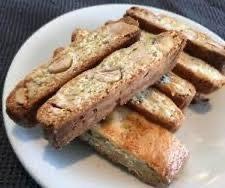
Crunchy twice-baked cookies packed with nuts and almonds, sliced warm and baked again until crisp like Zwieback.
 A Graubünden specialty
Zutaten
IngredientsMakes about 100 cookies
Tick off ingredients as you go.
Nährwerte
Nutrition · per cookie
| Energy | 204 kJ / 49 kcal |
|---|---|
| Fat | 2.3 g |
| of which saturates | 0.4 g |
| Carbohydrate | 5.7 g |
| of which sugars | 3.2 g |
| Fibre | 0 g |
| Protein | 1.2 g |
| Salt | 0.03 g |
Nuts counted as hazelnuts.
Estimate for the original amounts, per cookie. Salt added to taste is not included. Calculated from the Swiss Food Composition Database (V7.1, FSVO).
Zubereitung
Directions- 1
Rub the nuts and almonds in a cloth. Roughly chop two thirds of them and leave the rest whole.
- 2
Beat the eggs with the sugar, vanilla sugar and salt until creamy.
- 3
Mix in the nuts and almonds and as much flour mixed with baking powder as needed to form a firm paste. Finally knead in the butter until the dough is smooth.
- 4
Roll out strips about 1 cm thick and place them on a greased baking sheet.
- 5
Bake for about 25 minutes in the middle of an oven preheated to about 200 °C.
- 6
Cut the still-warm strips into 1 cm slices, lay them cut side down on the baking sheet and bake again for about 20 minutes until lightly crisp, like Zwieback.
“An old recipe from my mother. I love them.”
En Guete!
Bon appétit · Buon appetito · Bun appetit · Enjoy your meal
First published in the Arizona Swiss Society's Valley Echo newsletter, Winter 2020/2021.
A bit of history
Geschichte
Where Totenbeinli comes from, gathered from reliable sources such as the Culinary Heritage of Switzerland inventory.
SRF reports that these nut biscuits come originally from the canton of Graubünden. According to SRF dialect expert Markus Gasser, they are probably named for their look, since they resemble a "Totenbein", an old word for bone. They are said to have been served mainly with coffee at funeral meals, and in the Engadine "oss da mort" were made for All Souls' Day on 2 November. The Museum für Sepulkralkultur notes that they have since become part of Swiss Christmas baking, and the Culinary Heritage of Switzerland lists them among the treats offered to young men on their New Year's Eve rounds in Graubünden. Today they are just as often called Nussstängeli, little nut sticks: Betty Bossi publishes the recipe as "Nussstängeli (Totenbeinli)", and Swissmilk's French edition of its Totenbeinli recipe calls them biscuits croquants aux noisettes. Ticino and Italian-speaking Graubünden have their own hard, bone-shaped nut biscuits for All Souls, the ossi da mordere or ossi di morto, recorded in a Val di Blenio recipe from 1780 and dipped in coffee or wine; the Culinary Heritage inventory calls the German-Swiss Totenbein a similar biscuit. The soft "oss da mord" from the Maggia valley, however, is a different pastry altogether.
Sources
- Weihnachtsguetzli – Woher haben die Guetzli ihre Namen? · Radio SRF 1
- Totenbeinli (Gebäck) · Museum für Sepulkralkultur, museum-digital
- Bündner Röteli · Kulinarisches Erbe der Schweiz
- Nussstängeli (Totenbeinli) · Betty Bossi
- Biscuits croquants aux noisettes (German edition: Totenbeinli) · Swissmilk
- Ossi da mordere (ossi di morto) · Kulinarisches Erbe der Schweiz
- Diese Knochen sollst du beissen · Tages-Anzeiger
More from our kitchen
One more cookie never hurt
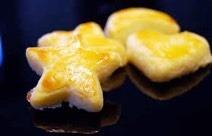
Mailänderli
Swiss Butter Christmas Cookies
One of the most popular Christmas cookies in Switzerland: rich, lemony butter cookies cut into shapes and glazed with egg yolk.
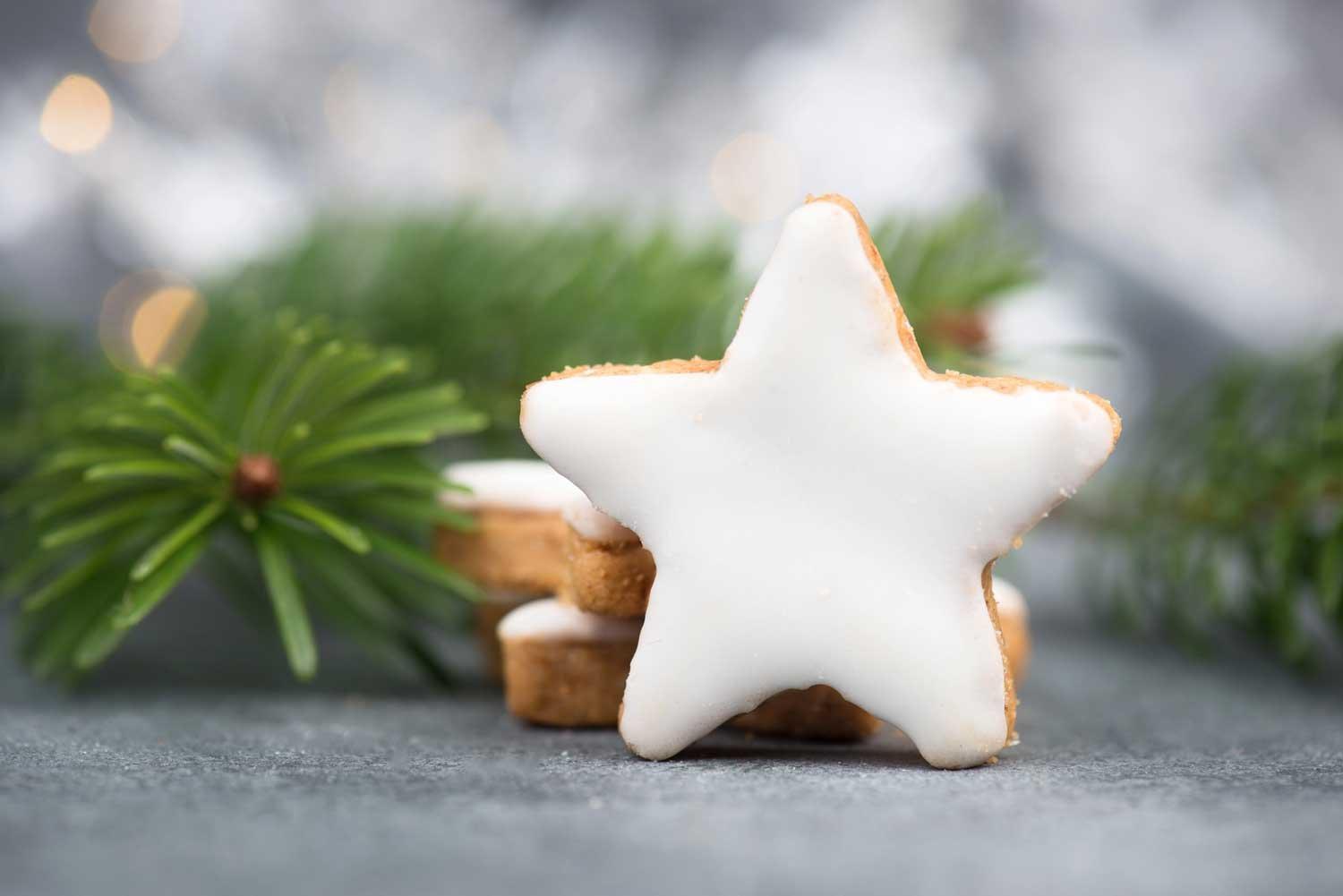
Zimtsterne
Cinnamon Stars
The classic Swiss Christmas star: almond and cinnamon dough under a snow-white icing.
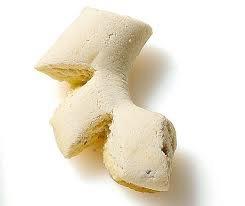
Chräbeli
Anisguetzli · Swiss Anise Cookies
Crisp anise cookies left to dry overnight, so they bake up white on top with little "feet" underneath. Lovely with a cup of coffee or tea.