Baking
Puff Pastry Easter Bunnies
Blätterteig-Osterhasen
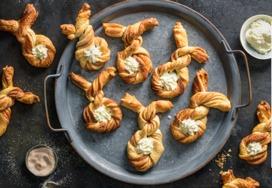
Twisted cinnamon-sugar puff pastry bunnies with whipped cream tails. Fun to shape with children.
Zutaten
IngredientsCinnamon sugar
Bunnies
Tick off ingredients as you go.
Nährwerte
Nutrition · per bunny
| Energy | 926 kJ / 222 kcal |
|---|---|
| Fat | 14 g |
| of which saturates | 7 g |
| Carbohydrate | 21 g |
| of which sugars | 6.9 g |
| Fibre | 0.7 g |
| Protein | 2.5 g |
| Salt | 0.41 g |
Estimate for the original amounts, per bunny. Salt added to taste is not included. Calculated from the Swiss Food Composition Database (V7.1, FSVO).
Zubereitung
Directions- 1
Mix the sugar and cinnamon.
- 2
Brush the pastry with water and sprinkle with the cinnamon sugar. Cut each pastry half lengthwise into thirds and roll each strip up lengthwise.
- 3
Cut the rolls in half lengthwise and twist the strands with the cut sides facing up. Starting from the middle, twist each roll twice, leaving a hole of about 3 cm, to form the ears. Place on a tray lined with baking paper.
- 4
Bake for about 15 minutes in the center of an oven preheated to 200 °C. Let cool slightly.
- 5
Pipe the whipped cream with a star nozzle (about 10 mm) to make the tails.

En Guete!
Bon appétit · Buon appetito · Bun appetit · Enjoy your meal
First published in the Arizona Swiss Society's Valley Echo newsletter, Spring 2020.
A bit of history
Geschichte
Where Puff Pastry Easter Bunnies comes from, gathered from reliable sources such as the Culinary Heritage of Switzerland inventory.
Puff pastry bunnies are a modern home-baking idea, but the hare they show has a long Easter history. The first known mention comes from the physician Georg Franck von Franckenau around 1682, who described the custom of a hare hiding eggs in the garden at Easter. In parts of Switzerland the cuckoo did this job for a long time. The hare took on the role in the 18th century and pushed aside other Easter animals such as the fox and the donkey. Today the Easter hare, or the rabbit in French- and Italian-speaking areas, hides the eggs for children to find.
Sources
- Fünfmalklug – Warum gibt's den Osterhasen? · SRF Einstein
- Easter customs have deep roots · SWI swissinfo.ch
More from our kitchen
Keep the oven warm
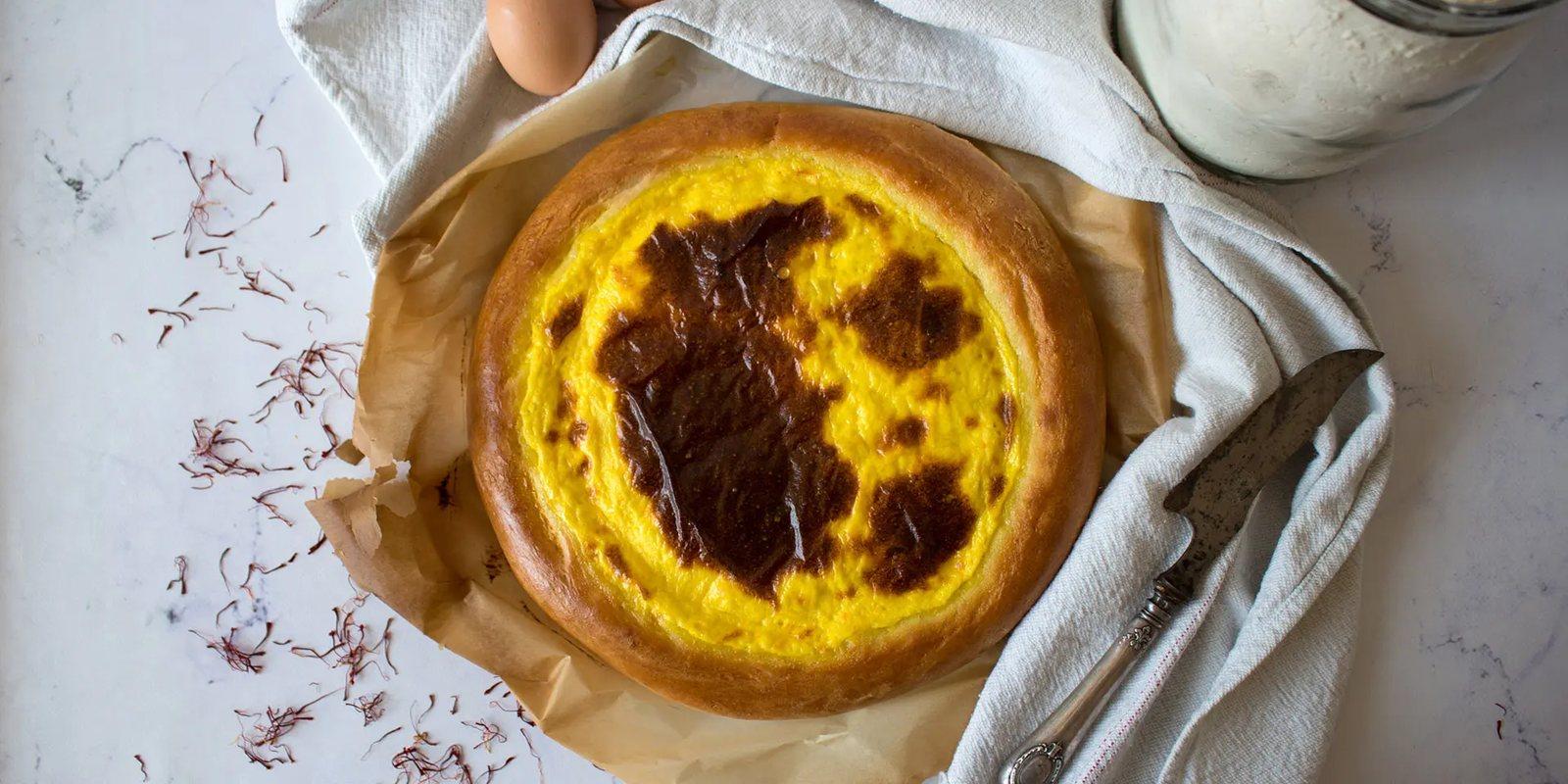

Toétché jurassien
Jura Cream Tart
A Swiss Wähe from the Jura: a thin yeast dough under a rich cream and saffron custard. In the canton of Jura it is also known as St. Martin's Tart.
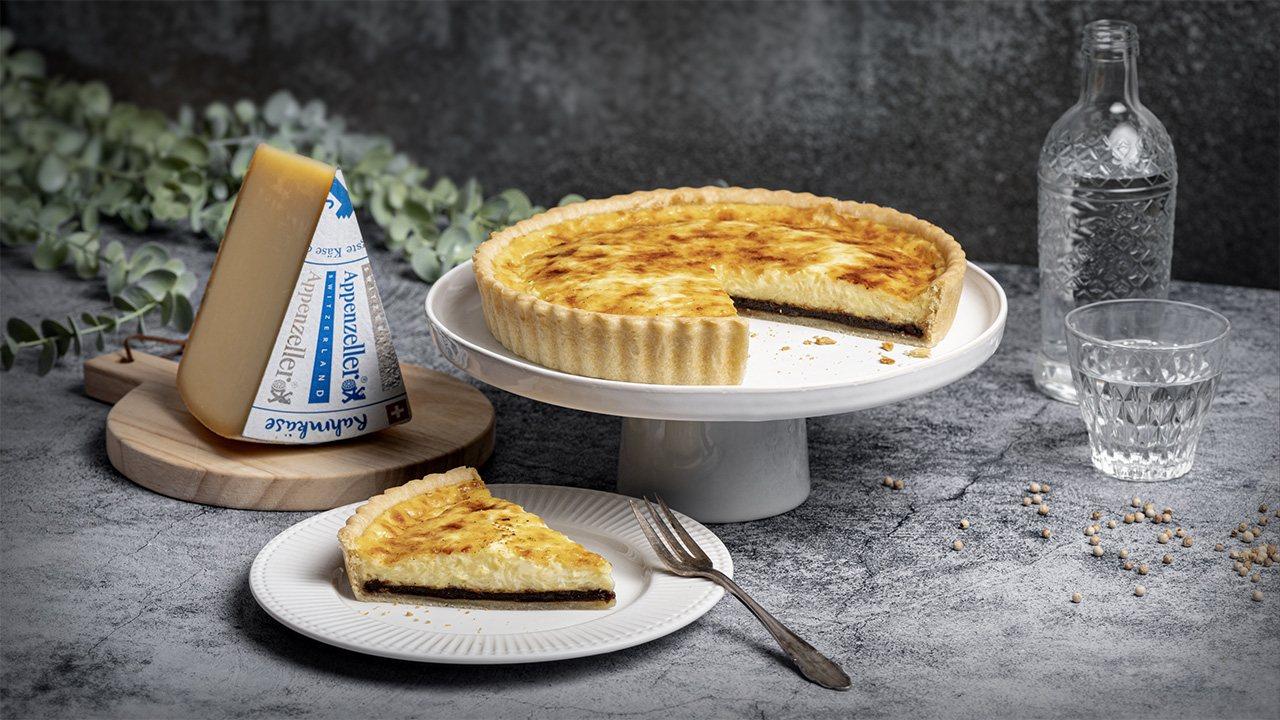
Appenzeller Schlorzifladen
Cheese and Pear Tart
A salty-sweet take on the Schlorzifladen: mild Appenzeller cream cheese over a pear filling, which it complements without overpowering.
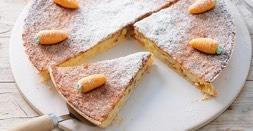

Gâteau de Pâques
Osterfladen · Swiss Easter Tart
The Swiss Easter tart: a creamy filling of rice pudding, quark, almonds and sultanas in a shortcrust shell, dusted with icing sugar.